Hurricanes and The Concession: Storm History, Prep and Recovery
Manatee County has been affected by Ian in 2022 and by Debby, Helene and Milton in 2024, mostly through river flooding, rain and coastal surge rather than direct inland wind. Evacuation levels A through E are based on storm surge and are looked up by address. Preparation means knowing your level, reviewing insurance, hardening the home and planning for outages and re-entry.
Anyone who has bought a house on the Gulf coast of Florida has had the same conversation with themselves: the weather is beautiful ten months a year, and the other two months come with a plan. This page is that plan, written around Manatee County and built from the official record rather than from impressions. It covers what the major storms of the last few years did here, how the county organizes evacuation, what home preparation involves, and what the days after a storm look like.
One limit applies throughout. The reports describe storm effects by county and by area. None of them is a verdict on a particular street in The Concession. Where a source gives a number for Manatee County, it is quoted for the county, and a buyer should ask the association and the seller for the history of the specific home.
When is hurricane season, and what is the actual risk to a home in Lakewood Ranch?
The Atlantic hurricane season begins June 1, and the National Weather Service advises preparing before that date. The risk to a home in Lakewood Ranch comes from several different mechanisms, which the history below shows. Wind can damage roofs, openings and screen enclosures. Heavy rain can raise rivers and flood low areas well inland. Storm surge, which is saltwater pushed ashore, is the coastal threat, and the evacuation system is built around it.
Those mechanisms are not equally important at every address, which is why preparation starts with finding out your own. The weather and seasons page puts hurricane season in the context of the rest of the year.
What did Hurricane Ian do in Manatee County in 2022?
According to the National Hurricane Center's tropical cyclone report, Ian made landfall on September 28, 2022 at Cayo Costa as a Category 4 hurricane, then came ashore again about 90 minutes later near Punta Gorda. The worst surge was farther south, on Fort Myers Beach and Estero Island, where inundation reached 10 to 15 feet above ground. In the report's accounting, Manatee and Sarasota counties are named among the areas north of the track that experienced significant flooding when the Peace, Myakka and Alafia rivers and Horse Creek reached record crests.
The lesson is the one the report states in its own geography. A storm whose landfall is well to the south can still cause serious freshwater flooding here, and the effects show up days later as rivers crest.
What did Debby, Helene and Milton do in 2024?
Three storms in about two months produced three different kinds of impact.
Debby, August 2024. The center's report says Debby made landfall as a Category 1 hurricane in the Big Bend near Steinhatchee on August 5, 2024. For west-central Florida the story was rain. Much of the state received 5 to 10 inches, with 10 to 15 inches near and south of Tampa Bay, and almost 17 inches fell in Sarasota. The report describes major to historic flash and river flooding in Sarasota and Manatee counties. In Manatee County, it cites over 160 buildings with major damage, officials' estimates of over $55 million in total damage, and more than 200 high-water rescues, especially in the Parrish area. The Manatee River at Rye Bridge set a record crest.
Helene, September 2024. Helene passed well off Florida's west coast and reached Category 4 strength before landfall near Perry in the Big Bend on the night of September 26 into September 27 local time. The report gives a Manatee County coastal surge of about 5 to 7 feet, notes heavy damage on Anna Maria Island, and relays emergency managers' estimate that 90 to 95 percent of structures on Bradenton Beach were destroyed. It also states that mainland Manatee County had at least 594 structures destroyed and thousands more damaged. The county's own account of the storm, posted as it unfolded, notes that potable water service was shut off to Anna Maria Island, Holmes Beach, Bradenton Beach and Longboat Key as a precaution, that the Sunshine Skyway was closed, that crews monitored 737 lift stations, and that county offices, schools and courts were closed on Friday, September 27. It also records more than 2,900 calls to 311 for help with evacuation zones, sandbag locations and shelter rides.
Milton, October 2024. The report says Milton came ashore at Siesta Key at 0030 UTC on October 10, which was the evening of October 9 in Florida, as a Category 3 hurricane with estimated winds near 100 knots, after peaking earlier as a Category 5. Surge inundation of 4 to 6 feet occurred from Longboat Key to Venice. Rainfall gauges in Manatee County recorded roughly 3 to 13 inches, with about 13 inches near Bradenton. The storm also produced a tornado outbreak on October 9 across southern and central Florida, with 45 known tornadoes on land. The report estimates $34.3 billion in U.S. damage, almost entirely in Florida.
None of these reports isolates The Concession or Lakewood Ranch. The mix across three storms is the point: coastal surge in one, historic rainfall in another, wind and tornadoes in the third. A home's preparation has to cover all of them.
How do evacuation levels work in Manatee County?
Manatee County uses levels A through E, where A is the lowest-lying and is evacuated first. The levels come from storm surge modeling, not from rainfall or freshwater flooding. Officials estimate surge with hypothetical storm scenarios that account for pressure, size, speed and track. Areas outside any level are marked N/A or outside the evacuation area.
Several points from the county's pages deserve emphasis.
- Find your level every year. Use the Learn Your Level map or the Resident Information Tool, which also shows nearby emergency shelters. The county says levels can change as new data and coastline changes come in.
- Levels are not flood zones. The county states that evacuation levels are separate from FEMA-style flood zones and do not correspond to a hurricane's category. The flood zones and lakefront page covers the other side.
- Two levels, follow the lower one. If a property falls within two levels, the county says to follow the lower.
- Mobile homes and RVs leave at Level A. Anyone in a mobile home, manufactured home, RV or travel trailer must evacuate whenever Level A is issued.
- A mandatory order means leave. The county's storm FAQs say that if your level is under a mandatory order, leave right away, and that you may leave early if you have special needs, are in a vulnerable spot or do not want to wait.
A resident who lives outside every level may still choose to leave, for example because of an extended power outage or flooding on the roads. That is a household decision.
What should a home owner do before a storm?
The National Weather Service's pre-storm list is a sound frame: know your risk, know your evacuation zone, review your insurance, write an emergency plan, stock supplies and check equipment such as flashlights, generators and storm shutters, harden the home, learn the meaning of watches and warnings, and start before the season does.
Turning that into a checklist for a larger home:
- Insurance first. Read the policy and the hurricane deductible, confirm flood coverage is in place with its 30-day waiting period behind it, and photograph and video the house and contents. The homeowners insurance page explains deductibles and mitigation credit.
- Openings. Windows, sliding doors and garage doors are the weak points that insurers and inspectors focus on. Shutters, impact glass or both should cover every opening. If shutters are panels, know where they are stored, who installs them, and how long it takes.
- Roof. Have the roof inspected before the season, especially tile roofs, flashing and any penetrations, and keep repair records. Manatee County notes that if a roof was replaced it likely meets newer codes, and that a wind mitigation report can confirm a home's rating.
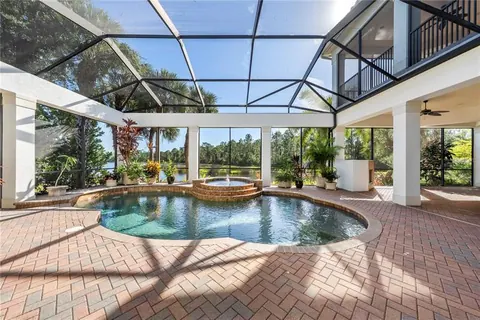
- Screen enclosure and pool. Know how the enclosure is designed to behave in high wind, and follow the pool steps on the pool and lanai maintenance page.
- Yard. Secure or store loose furniture, planters and decor, and trim trees well ahead of a forecast, not during one.
- Documents. Keep insurance policies, the deed, identification and contact lists in a waterproof container or in digital form that can be reached from elsewhere.
- Water and food. Stock supplies for the household and for pets. The county's pet guidance suggests at least three days of food and about a gallon of water per pet per day, vaccination records in a waterproof bag, a week of medications and carriers labeled with contact information.
- Vehicles. The county advises fully charging an electric vehicle before a storm, then unplugging it to protect it from surges.
For a house that is empty part of the year, the planning question is who acts when the owner is away. The second homes and seasonal living page covers that.
What does the building code history tell a buyer?
Manatee County's evacuation page offers a plain summary. Homes built after March 2012 were required to withstand 150 mph winds, homes built from March 2002 to March 2012 were required to withstand 130 mph, and homes built before March 2002 were built to 110 mph on the coast, or as low as 90 mph in some inland areas. A buyer can use those dates with the home's construction date and its roof replacement history. A wind mitigation inspection documents the features that matter and gives a basis for comparing houses. The new construction versus resale page covers the age comparison.
How do generators and power outages work?
Outages are normal after a major storm, and a household should decide in advance how it will handle one. A portable generator is the common answer, and the Consumer Product Safety Commission's rules are short: run it outdoors, a considerable distance from any window, entrance or vent, never in an attached or enclosed space such as a garage, basement, crawlspace or shed, and keep a working carbon monoxide alarm inside. Charcoal grills produce carbon monoxide too and must not be used indoors, even with openings for air.
The CPSC page does not address fuel storage or transfer switches, so a buyer who wants a permanently installed system should ask a licensed electrician and the association what is allowed and what permits apply. The architectural review page covers how exterior equipment is approved. For the provider side of electric and water service, see utilities, internet and services.
What happens after the storm passes?
Manatee County's guidance is to wait for official announcements before returning home and to check for hazards such as downed power lines and flooding. Floodwater, downed lines and damaged structures are the main immediate hazards, and the county's floodplain office asks owners of damaged buildings to contact it early, since repairs to substantially damaged structures are treated as substantial improvement.
A sequence that works:
- Wait for the all-clear for your area, and for roads to be open.
- Photograph and video damage before moving anything.
- Call the insurer promptly, and ask what emergency repairs are authorized.
- Make temporary protective repairs and keep every receipt.
- If water entered the house, contact the county floodplain office about any substantial damage determination.
- Check on the pool and enclosure using the UF/IFAS steps on the pool page, including never leaving a draining pool unattended.
- If a disaster declaration is made, note that FEMA assistance typically opens within days and the application window is usually 60 days from the declaration, according to the county's FAQ of June 2025.
Deadlines for claims are covered by Florida's Department of Financial Services: initial and reopened property claims within one year of the loss, supplemental claims within 18 months.
How should a household think about the decision to stay or go?
The county's guidance separates two ideas that people merge. A mandatory evacuation order is tied to a level and is based on surge. A decision to leave early is personal and can rest on anything: a long outage, a medical need that depends on power, a house with a weak roof, or the plain preference not to be on the road when conditions deteriorate. The Helene account is a useful illustration of timing. By the evening of September 26 the county described travel as unsafe and asked people to shelter in place unless travel was essential, so residents who waited were no longer able to leave. A household that has chosen a destination, a route and a departure trigger in advance does not have to decide under pressure. Write the trigger down, for example a specific watch or warning issued for the county, and agree on it with everyone who lives in or looks after the house.
What should a buyer ask about storm history?
- What storms has this house been through since it was built, and what damage, if any, was repaired?
- What is the roof's age, covering and last inspection, and does a current wind mitigation form exist?
- Are the openings protected, and how?
- Has the screen enclosure been replaced or repaired, and by whom?
- What are the evacuation level and flood zone of the address?
- Did any floodwater enter the house or the garage in Ian, Debby, Helene or Milton?
- What does the association do before and after a storm, and what are the owner's duties?
The answers shape the decision more than any county-level statistic. The moving to Bradenton checklist includes storm preparation among the early tasks for a new owner.
The storm figures here come from the National Hurricane Center and Manatee County pages listed above and were read in November 2026. Evacuation levels and county procedures change, so confirm them with Manatee County Emergency Management before each season.
Questions people ask
Which hurricanes have affected Manatee County recently?
The National Hurricane Center's reports describe Ian in September 2022, which brought record river crests to Manatee and Sarasota counties, then three storms in 2024: Debby in August, with historic flooding, Helene in September, with 5 to 7 feet of surge along the Manatee coast, and Milton in October, which made landfall at Siesta Key as a Category 3 hurricane.
How do I find my hurricane evacuation level in Manatee County?
Use the county's Learn Your Level map or its Resident Information Tool, which also shows nearby shelters. Levels run from A, evacuated first, to E, and are based on storm surge. The county says to check every year because levels change, and to follow the lower level if a property falls in two. Areas outside any level are marked as outside the evacuation area.
How exposed is a Lakewood Ranch home to hurricanes?
No home is immune from storm effects, and the sources reviewed do not rate any specific address. They do show that storm effects differ by location: coastal areas faced surge, while inland communities saw rain and river flooding. Check your evacuation level, flood zone, roof and openings, and ask the association and seller about any storm history for the specific home.
How long do I have to report hurricane damage to my insurer?
Florida's Department of Financial Services says initial and reopened property claims must be reported within one year of the loss, and supplemental claims within 18 months, with the periods for windstorm claims running from landfall or from when the storm caused the damage. Photograph damage before cleanup, keep receipts, and report promptly rather than at the deadline.
Where can I run a generator after a storm?
The Consumer Product Safety Commission says to run a portable generator outdoors, a considerable distance from any window, entrance or vent, and never in an attached or enclosed space such as a garage, basement, crawlspace or shed. It also advises keeping a working carbon monoxide alarm inside the home. Do not use charcoal grills indoors either.
Sources checked
- NHC Tropical Cyclone Report, Hurricane Ian (AL092022)
- NHC Tropical Cyclone Report, Hurricane Debby (AL042024)
- NHC Tropical Cyclone Report, Hurricane Helene (AL092024)
- NHC Tropical Cyclone Report, Hurricane Milton (AL142024)
- Manatee County, Evacuation Levels
- Manatee County Emergency Management, Storm FAQs (June 4, 2025)
- Manatee County, Helene Impacts Manatee County
- National Weather Service, What to Do Before the Tropical Storm or Hurricane
- U.S. Consumer Product Safety Commission, Generators and Engine-Driven Tools
- UF/IFAS Extension, Pools and Hurricanes
Want to see The Concession in person?
A private tour takes about an hour and covers the community, the lots and the homes that fit what you are looking for.