Selling a Luxury Home in The Concession
A seller in The Concession should price from comparable closed sales, gather the association, permit and warranty paperwork before listing, and make the Florida disclosures on time: known material defects, radon, flooding and the association disclosure summary. Photos must not mislead, marketing should describe the property and not the buyer, and club membership should never be implied.
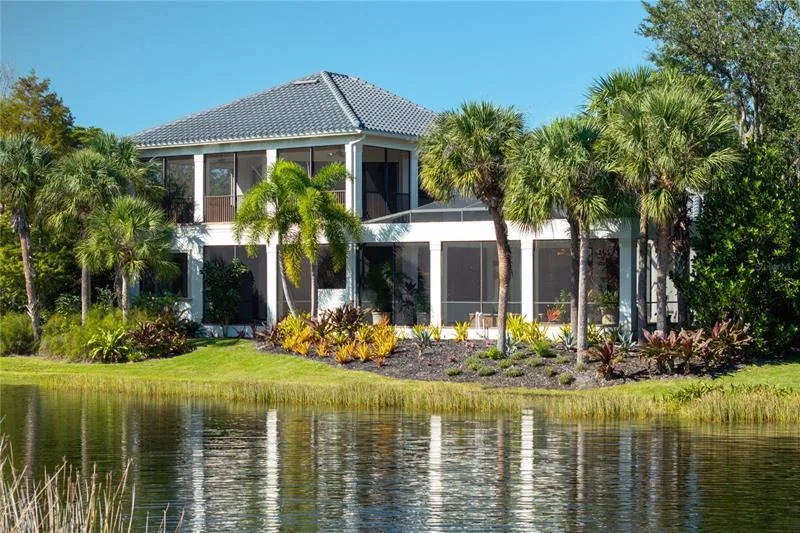
Sellers of expensive homes tend to ask about price first. The better first question is what a buyer, a buyer's attorney and a buyer's lender will want to see, because a sale in this range is won or lost on paperwork and on trust as much as on number. This page covers the seller's side of the process in The Concession: how to build a defensible price, what to assemble before the listing goes live, what Florida requires you to disclose, how to handle photography, what approvals a buyer may face, and which closing items belong to the seller. It is general information, not legal advice, and it does not discuss commissions or quote any home's price.
How do you set a price a buyer and an appraiser will accept?
Start from evidence, not from what the house cost to build or what a neighbor hopes to get. The method is the same one a buyer should use, and it is explained in detail on the market-reading page. Your agent should produce a written comparable-sales analysis built from closed sales, not active listings, with adjustments for the differences between those homes and yours: living area, lot, frontage, age, condition, outdoor living space and what is included.
Three points deserve attention before you set the number.
- Small samples. A luxury segment may have only a few closed sales a month. Ask how many sales support each conclusion and what you would conclude if the highest or lowest sale were removed.
- The appraisal. A financed buyer's lender will order an appraisal, and a price above the appraised value leaves a gap that someone must cover. The financing page explains what buyers can do and why a contingency matters to both sides.
- Original versus final list price. If you reduce, the market sees the history. Ask your agent how reductions will appear in the MLS and on listing portals.
Be wary of a number presented without a source. If your agent proposes a price, ask what closed sales support it and how each was adjusted.
What should you do to prepare the house?
Preparation has two parts: the physical condition, and the paper trail that proves it.
Condition
A buyer of a house this size will usually commission specialist inspections, as the inspection guide describes: general, wind mitigation, roof, pool, termite and, where it applies, stucco and moisture. Anything those inspectors would find is a better conversation for you to have first. Many sellers address visible roof, pool equipment, air-conditioning and moisture issues before listing, or at least get written estimates, so that negotiation does not start with unknowns.
Consider these in particular:
- Wind mitigation form. The state's uniform mitigation verification form stays valid for up to five years if the structure has not materially changed and the form has no inaccuracies. If you have a current form, give it to buyers. If yours is older, ask your insurer or an authorized inspector whether an updated form is worthwhile, noting that the state's form changed on April 1, 2026.
- Roof records. The installation date, permit, warranty and any repair history. Insurers weigh roof age heavily, so buyers will ask.
- Pool and lanai. Equipment ages, service records, and the permit status of the pool, enclosure, outdoor kitchen and any structure added later.
- Termite records. Any treatment record, bond or warranty and the most recent wood-destroying organism report.
The paper trail
Assemble a binder, physical or digital, before you list. Each item answers a question a buyer would otherwise ask during a short inspection period.
- The recorded covenants and the association's current rules, budget and fee schedule.
- Any architectural approvals for the house and for changes made since it was built, such as a pool, addition or exterior alteration. The community's design manual, amended and restated in October 2015, describes a two-stage review of concept and final plans and a final compliance inspection. If you made a change, find the approval and the closing sign-off. If it cannot be found, ask the committee's administrator whether it can be reconstructed. The renovations and architectural review page explains how that works.
- Permits and final inspections for any work requiring them.
- Warranties and manuals: roof, windows, appliances, pool equipment, irrigation, generator, water treatment and automation systems.
- The survey and any elevation or flood information you hold.
- Insurance claim history, if any, and a copy of the current policy declarations for a buyer's agent to quote against.
- A list of what conveys with the house and what does not.
 Virtually staged
What must you disclose?
Florida requires specific disclosures, and an As Is contract does not remove them. The points below come from Florida Realtors' summary of disclosure law and the statutes cited; a Florida real estate attorney can tell you how they apply to your facts.
- Known material defects. You must disclose known facts that materially affect the property's value and are not readily observable by the buyer. This applies in an As Is sale. Written disclosure is the better record.
- Radon. A statutory radon notice must be given before or at contract signing. Florida Realtors contracts include the required wording.
- Flooding. Section 689.302 requires a written flood disclosure at or before signing. The form tells the buyer that standard homeowners policies do not cover flood damage. Under the changes effective October 1, 2025, you also report whether you know of flooding that damaged the property during your ownership and whether you received assistance to repair flood damage, not only federal assistance. Answer from what you actually know and keep your records. The flood zones page gives the buyer's perspective.
- Code enforcement. If a code enforcement proceeding is pending, you must disclose it in writing, provide the related notices, tell the buyer the new owner will be responsible for compliance and notify the code official of the transfer within five days.
- The association disclosure summary. Section 720.401 requires the buyer to receive a standardized summary before signing a contract in a community with an association. If the seller is not the developer, the seller provides it. A buyer who did not receive it before signing may cancel within three days after receiving it or before closing, whichever comes first, and the right cannot be waived. Delivering it with the offer prevents a late cancellation. This assumes the home belongs to an association governed by that chapter, which the recorded covenants will show.
A death on the property is addressed separately in the statute and is not among the required disclosures, according to Florida Realtors. For anything not on this list, the safe approach is to ask whether a reasonable buyer would want to know, and when in doubt, tell your attorney and disclose.
Who orders the estoppel certificate, and when?
The estoppel certificate is the association's written statement of what is owed on the property and related account details. The owner, the owner's designee or the mortgagee may request it, and the association must issue it within 10 business days of the written request. If it is late, the association cannot charge a fee. A standard certificate carries a statutory fee cap, higher for expedited delivery within three business days and lower if the account is delinquent, with the amount adjusted over time by the state. A certificate delivered by hand or electronically is valid for 30 days, or 35 days when mailed.
That validity window is why timing matters. Order it close enough to closing that it will still be valid, with enough margin for a delay. A title company typically orders it, and a title law firm's guide to Sarasota and Manatee closing customs says the seller customarily pays for it, though that is a custom and not a rule. Your contract controls.
How should you handle photography and virtual staging?
Buyers form their first impression from photographs, so accuracy is a legal and ethical matter. Florida Realtors' guidance on virtual staging recommends showing staged images next to the original, unedited photos and labeling the staged ones clearly, and says MLS rules generally allow only cosmetic changes, require clear labels and require originals. A Florida real estate law firm notes that Florida has no statute that matches California's recent law on AI-edited listing photos and does not require a specific disclosure statement, but that Florida law bars misleading real estate advertising and that an edited image that misrepresents the property falls under that rule.
Use these as working rules:
- Label every virtually staged or digitally altered image, and keep the originals.
- Do not use editing to add or remove features such as power lines, neighboring buildings, seawalls or docks, to change a window view, to hide cracks, stains or water damage, or to make rooms look larger.
- Take extra care on a waterfront or lakefront property. Seawall and dock condition, shoreline and sight lines are exactly the details a buyer will compare with reality at the showing.
- Ask your photographer and any staging vendor to give you a list of edits made.
- Check your MLS's current rules before submitting, since they vary and change.
Twilight, drone and video work should follow the same principle: show the property as it is.
How do you market a golf-community property accurately?
Describe the property, the amenities and the distances, and let buyers decide whether it fits. The U.S. Department of Housing and Urban Development states that housing advertisements expressing a preference, limitation or discrimination based on race, color, religion, sex, disability, familial status or national origin are illegal under the Fair Housing Act, and that the rule applies to anyone who places an ad, even for an exempt property. In practice, that means no language about who would enjoy or belong in the house. Write about rooms, lot, materials, upgrades, systems and what the neighborhood's published documents say.
Be careful about statements regarding the club. The golf club and the residential community have been described in public reporting as separate ventures, and the club says its course was designed with no houses lining it. Do not imply that membership is included, available or discounted unless the club has confirmed it in writing. Do not describe a "course view" or "fairway" unless it is accurate for the lot, and verify distances. The membership page and the neighborhoods and sections page describe what is publicly stated. If you are a club member, ask the membership office what happens to your membership when you sell and whether a buyer can apply, so you can answer buyers truthfully.
What approvals might the buyer face?
Two different things can look like approvals, and a seller should know which applies.
The first is association approval. The Florida Realtors contract includes an approval contingency for communities where the association must approve the buyer. According to a title underwriter's summary of the contract, the seller starts the process within a set period after the effective date, with a default of five days, the approval is due a set number of days before closing, again with a default of five, and the buyer can terminate and recover the deposit if approval is denied. Those defaults can be changed in the contract. Ask the association whether it reviews buyers at all and, if it does, what it needs and how long it takes.
The second is the club. Whether a buyer can or must join the club on purchase was not verified for this page, and it is separate from association approval. Ask the club, and put the answer in writing for any buyer who asks.
What closing items belong to the seller?
Florida closing costs follow the contract and local custom. A title law firm's guide to local customs says the seller customarily pays documentary stamp tax on the deed in both Sarasota and Manatee counties, and the buyer customarily pays the tax on a new mortgage note and the survey. The statutory rate on a deed is 70 cents per $100 of the price. Title insurance practice varies by county and contract, so ask the title agent who is paying for what. In addition, expect the payoff of any mortgage and the recording of its satisfaction, proration of property taxes and association dues through the day before closing, and the estoppel certificate. Ask the title agent for a net proceeds estimate early, and update it when the contract is signed.
The tax angle deserves a note. Under Florida's system the assessed value resets after a sale, and Manatee County's Property Appraiser warns that a buyer's taxes may rise after a purchase. A 2026 law, described by the Pinellas County Property Appraiser as responding to buyers who faced large increases, will require online listing platforms that show tax estimates to use the Department of Revenue's data and methodology, effective February 2027. Whatever a platform shows, do not present your own bill as what the buyer will pay. Voters also approved Amendment 3 in November 2026, which changes exemption and cap rules from 2027, as described on the property taxes page. Let the buyer get their own estimate from the Property Appraiser.
Does the time of year matter?
It can, and the way to find out is to look at the data, not to assume. Monthly Sarasota-Manatee reports compare each month with the same month a year earlier so that seasonal changes are not mistaken for real ones. Ask your agent to chart listings, pendings and closings by month for your price band over several years, and consider it alongside your own constraints: when you want to move, how soon the house will be ready, and whether you will be in the state during showings. If you are away, the second homes page covers key holders and access, which also matters for a seller who needs someone to show a house. The weather and seasons page covers the climate.
A seller's checklist
- Request a written comparable-sales analysis and ask how many sales support it.
- Gather the covenants, rules, budget and fee schedule.
- Find architectural approvals and permits for the house and later changes.
- Collect warranties, manuals and service records.
- Locate or update the wind mitigation form and roof, pool and termite records.
- Prepare the flood, radon and defect disclosures and the association summary.
- Review photography and staging for accuracy and label any altered images.
- Ask the club what applies on a sale, if you are a member.
- Time the estoppel order to the contract.
- Ask the title agent for a net proceeds estimate.
Buyers read a house through its documents. A seller who has them ready gives a buyer fewer reasons to hesitate.
Questions people ask
What must a Florida seller disclose when selling a home?
A seller must disclose known facts that materially affect the property's value and that a buyer cannot readily see, even in an As Is sale. Florida also requires a radon notice, a written flood disclosure at or before contract signing, disclosure of any pending code enforcement action, and, in an association community, the disclosure summary. Ask a Florida real estate attorney to review your specific facts.
What is the HOA estoppel certificate and who orders it?
It is the association's written statement of what is owed on the property and related account information at a given date. The owner, the owner's designee, or the mortgagee can request it, and Florida requires the association to deliver it within 10 business days of a written request. It stays valid for 30 days if delivered by hand or electronically, so timing the order matters.
Can I use virtual staging in my listing photos?
Florida has no statute that sets a specific disclosure statement for virtual staging, but misleading advertising is prohibited and MLS rules vary. Industry guidance recommends labeling staged images and showing the original photos. Never use editing to remove or add features, change views or hide defects, since that can become a misrepresentation.
Does a buyer need approval from the club or the association?
They are separate questions. The Florida Realtors contract includes an association approval contingency if the association must approve the buyer, with default timing the parties can change. Club membership is a different relationship and was not verified to be tied to a home purchase, so ask the club what applies and put the answer in writing for the buyer.
When is the best time of year to list?
The data should answer that, not a rule of thumb. Monthly Sarasota-Manatee market reports compare each month with the same month a year earlier because seasons affect activity. Ask your agent to pull several years of monthly listings, pendings and closings for your price band, and weigh that against your own timeline and whether the house will be ready to show.
Sources checked
- Florida real estate disclosure laws (Florida Realtors)
- Florida Statutes 689.302, flood disclosure (Florida Senate)
- Florida expands flood disclosures, effective October 2025 (Florida Realtors)
- Florida Statutes 720.401, prospective purchasers' disclosure (Florida Senate)
- Florida Statutes 720.30851, estoppel certificates (Florida Senate)
- 3 things to know about virtual staging (Florida Realtors, May 2025)
- AI-edited listing photos and Florida law (Barnes Walker)
- Sarasota and Manatee closing customs (Barnes Walker)
- FR/BAR contract provisions summary, August 2025 (Old Republic Title, The Fund)
- Wind mitigation resources (Florida Office of Insurance Regulation)
- Fair housing advertising (U.S. Department of Housing and Urban Development)
- The Concession Design Standards Manual, amended and restated October 5, 2015
- Florida property tax legislative update (Pinellas County Property Appraiser)


Want to see The Concession in person?
A private tour takes about an hour and covers the community, the lots and the homes that fit what you are looking for.